The wind is strong
The rain is hard
Strange noises come
from outside my home
Perhaps the world will end tonight
the weather's right
And if it did, I'd leave
so much undone
so much unwritten
but at least
I wouldn't have to face
tomorrow
I took four classes this semester
and failed them all by any measure
If by tonight
I cannot write
several responses to
things I've yet to read
Then another failure
becomes official
unless the first
hasn't yet.
And of the other two
who knows?
I know one failure is deffered
but
can I make it into a success
before that extra time runs
out?
And of the other I haven't heard
Haven't heard for good or ill
which makes the prospect
seem worse still.
I hate uncertainty
it seems
more than certain shattered dreams.
And can I solve things by tonight?
Can I really read and write
what must be done
'fore time runs
down?
All hope seemed lost
long ago
and nothing new
has changed since then
in any way, but wrong.
The wind is strong
The rain is hard
Strange noises come
from the space
beyond my walls
Perhaps the world will end
tonight.
The weather's right.
Showing posts with label Mayan Calendar. Show all posts
Showing posts with label Mayan Calendar. Show all posts
Friday, December 21, 2012

The end of an Era (image post)
It think we can probably safely assume that people coming here looking for information on the Mayan Calendar will end today, not that the posts on it were ever that popular in the first place, still clearly these have seen their day come and go:
About the Mayan Calendar Part 1: Our Calendar and the Long Count
About the Mayan Calendar Part 2: Hypothetical Calendars
About the Mayan Calendar Part 3: Modular Arithmetic and the the Tzolk'in
About the Mayan Calendar Part 4: The Haab' and the Calendar Round
About the Mayan Calendar Part 5: Prophecy and the Short Count
On the accuracy of the Mayan Calendar,
Yesterday I said all that I'm going to say about the end of the word, so today I figured I'd make a post with images because I've been taking pictures of dawn and sunset for so long that it's about time I used at least one of them for something.
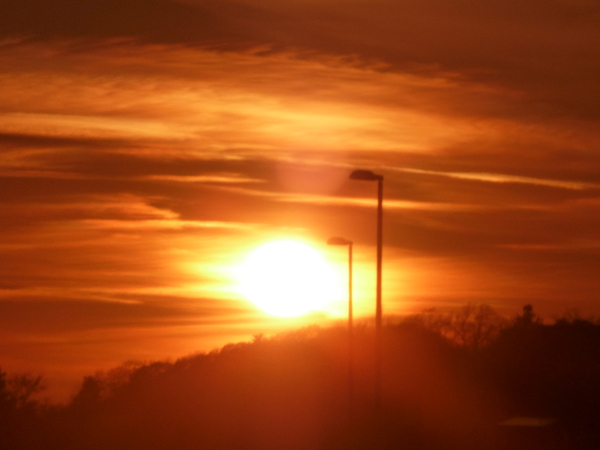
Some people believe that the world as we know it will end today, it will be the end of an era, the sunset of our age:





Others think that it is instead the dawn of a new era:


And for a lot of people it's some other time of day:


Or night:


About the Mayan Calendar Part 1: Our Calendar and the Long Count
About the Mayan Calendar Part 2: Hypothetical Calendars
About the Mayan Calendar Part 3: Modular Arithmetic and the the Tzolk'in
About the Mayan Calendar Part 4: The Haab' and the Calendar Round
About the Mayan Calendar Part 5: Prophecy and the Short Count
On the accuracy of the Mayan Calendar,
Yesterday I said all that I'm going to say about the end of the word, so today I figured I'd make a post with images because I've been taking pictures of dawn and sunset for so long that it's about time I used at least one of them for something.
Some people believe that the world as we know it will end today, it will be the end of an era, the sunset of our age:
(Click on smaller image to see it larger)




(Click on smaller image to see it larger)


Or night:

[Added:]
Crap, I forgot something, while going through pictures I came across this, I realize it's not plural, but even so:
(And yes, I know it's a mess.)
Thursday, December 20, 2012
What to do when the world ends tomorrow/today
So, for some of us the world has already ended.
New Zealand for example, three hours since December 21st 2012 came. For other's it's yet to come. Or perhaps I should say that the world ends today for some of use and tomorrow for others. Either way, doesn't much matter.
What to do when the world is ending?
It's been more than a year since I wrote, "The World Ends Today," but I think the general advice still holds true:
Of course, half the time the world is ending. These things happen.
-
Also, the Mayan Calendar, I've written about that, haven't I?
About the Mayan Calendar Part 1: Our Calendar and the Long Count
About the Mayan Calendar Part 2: Hypothetical Calendars
About the Mayan Calendar Part 3: Modular Arithmetic and the the Tzolk'in
About the Mayan Calendar Part 4: The Haab' and the Calendar Round
About the Mayan Calendar Part 5: Prophecy and the Short Count
On the accuracy of the Mayan Calendar
If you want a, mundane, sign of the world actually ending consider this: that five part series (originally intended to be a single post but it got out of hand) was interrupted (between 2 and 3.) By snow. And hardly the first significant snow of the year. That was more than a year ago, making it earlier in the year than this.
The first significant snow of this year came on Monday, a fair bit later than the interruption of last year. The rains since Monday have washed most of the snow away. That means we're not even very deep into Autumn yet. Winter is nowhere on the horizon. Temperature wise, I mean. From a "relationship of the earth to the sun" perspective winter starts tomorrow, when the world ends. Or today, if you're in certain time zones and the northern hemisphere. (Only northern hemisphere winter that starts tomorrow, after all.)
Alone that means nothing. Sometimes seasons come late or don't come at all from a climate/weather perspective, that's why we mark them with an calendar based on astronomical events in the first place. It'd be damn annoying to have the official seasons shift yearly on the whims of the weather.
The problem is that it's not alone, all the data points in the same direction. Things are changing, and while the changes might be better for someone, humanity is not counted amoung such. If you want to be worried about the end of the world, I direct your attention to climate change, not the Long Count of the Maya people.
Of course, the people who say the Mayan Calendar predicts the end of the world tomorrow, do say that end will come by rising waters, and sea levels are rising, so give it some time and maybe it'll turn out that tomorrow was some inflection point. It's extremely unlikely, but in an infinite universe anything is possible.
New Zealand for example, three hours since December 21st 2012 came. For other's it's yet to come. Or perhaps I should say that the world ends today for some of use and tomorrow for others. Either way, doesn't much matter.
What to do when the world is ending?
It's been more than a year since I wrote, "The World Ends Today," but I think the general advice still holds true:
The point is, end of the world. It's kind of a big deal. It would be shameful to allow it to pass unnoticed and unnoted.
Anyway, when I talk about the end of the world I tend to think of Exit Mundi which is a bunch of nicely sorted descriptions of how the world might end, and Alma Geddon which is a collection of predictions of when the world will end. For example, did you know that the world also ended on Friday, March 25, 970 CE? Well now you do.And I still have yet to write a novel. Not going to do it between today and tomorrow, so... damn.
Of course, half the time the world is ending. These things happen.
-
Also, the Mayan Calendar, I've written about that, haven't I?
About the Mayan Calendar Part 1: Our Calendar and the Long Count
About the Mayan Calendar Part 2: Hypothetical Calendars
About the Mayan Calendar Part 3: Modular Arithmetic and the the Tzolk'in
About the Mayan Calendar Part 4: The Haab' and the Calendar Round
About the Mayan Calendar Part 5: Prophecy and the Short Count
On the accuracy of the Mayan Calendar
If you want a, mundane, sign of the world actually ending consider this: that five part series (originally intended to be a single post but it got out of hand) was interrupted (between 2 and 3.) By snow. And hardly the first significant snow of the year. That was more than a year ago, making it earlier in the year than this.
The first significant snow of this year came on Monday, a fair bit later than the interruption of last year. The rains since Monday have washed most of the snow away. That means we're not even very deep into Autumn yet. Winter is nowhere on the horizon. Temperature wise, I mean. From a "relationship of the earth to the sun" perspective winter starts tomorrow, when the world ends. Or today, if you're in certain time zones and the northern hemisphere. (Only northern hemisphere winter that starts tomorrow, after all.)
Alone that means nothing. Sometimes seasons come late or don't come at all from a climate/weather perspective, that's why we mark them with an calendar based on astronomical events in the first place. It'd be damn annoying to have the official seasons shift yearly on the whims of the weather.
The problem is that it's not alone, all the data points in the same direction. Things are changing, and while the changes might be better for someone, humanity is not counted amoung such. If you want to be worried about the end of the world, I direct your attention to climate change, not the Long Count of the Maya people.
Of course, the people who say the Mayan Calendar predicts the end of the world tomorrow, do say that end will come by rising waters, and sea levels are rising, so give it some time and maybe it'll turn out that tomorrow was some inflection point. It's extremely unlikely, but in an infinite universe anything is possible.
Tuesday, December 4, 2012
On the accuracy of the Mayan Calendar
My watch does not display the correct time. The time it has is about two and a half minutes ahead of actual time. Slightly less.
I know this, and since I know this I can tell the correct time fairly accurately. If I were to reset my watch to the correct time I'd risk forgetting that I reset and assuming it's about two and a half minutes later than it actually is.
Knowing the limitations of your time piece can be valuable It allows one to adjust accordingly. That's how our own system of leap days came to pass. They adjust for the limitations of our calendar which left to its own devices would get well out of whack.
A different method for adjusting would be to just keep track of how out of whack it had gotten and adjust one's behavior accordingly. My watch doesn't really run fast or slow, it's just got the wrong time and so continues to have the wrong time at about the same degree of wrongness as the days go on. I know it's wrong and it doesn't bother me much. It might if I didn't know it was wrong.
If I wanted to, I seldom do, I could figure out exactly how far off my watch was and then, via adjustment, tell the correct time very accurately.
In some people's eyes that makes my watch a very accurate watch. Technically it just has a level of precision and a mostly uniform inaccuracy.
I bring this up in a post with "Mayan Calendar" in the title because of, I suppose, a quote from Silverado: "Life is what you make it. If it doesn't fit, make adjustments."
I adjust for the inaccuracy of my watch. Calendars are forced to adjust for the inaccuracy of Calendars because the solar system never got the message that we'd like to have a calendar that consistently reflected the seasons year after year.
We make adjustments with leap days. Add a day if the year is divisible by four, unless it's divisible by 100, unless it's also divisible by 400 in which case add the day after all.
They Maya people did something more akin to what I do with my watch. The recognized the inaccuracy they took it into account, they learned to live with it. The result was that that their adjustment (which basically involves saying, "If we wait 1508 Haab' years that's the same as 1507 solar years and things line up again") gave them a better approximation of the solar year than ours by a nearly negligible amount.
Presenting that as them having an extremely accurate calendar is like me presenting my watch as extremely accurate because I happen to know how far off it is and can adjust for it.
Their calendar was not accurate. It was wrong. They did an impressive job of figuring out precisely how wrong it was and taking that into account, but the calendar itself was not accurate. The Maya themselves were apparently able to be accurate in their use of it, because they were able to take its creeping inaccuracy into account.
I know this, and since I know this I can tell the correct time fairly accurately. If I were to reset my watch to the correct time I'd risk forgetting that I reset and assuming it's about two and a half minutes later than it actually is.
Knowing the limitations of your time piece can be valuable It allows one to adjust accordingly. That's how our own system of leap days came to pass. They adjust for the limitations of our calendar which left to its own devices would get well out of whack.
A different method for adjusting would be to just keep track of how out of whack it had gotten and adjust one's behavior accordingly. My watch doesn't really run fast or slow, it's just got the wrong time and so continues to have the wrong time at about the same degree of wrongness as the days go on. I know it's wrong and it doesn't bother me much. It might if I didn't know it was wrong.
If I wanted to, I seldom do, I could figure out exactly how far off my watch was and then, via adjustment, tell the correct time very accurately.
In some people's eyes that makes my watch a very accurate watch. Technically it just has a level of precision and a mostly uniform inaccuracy.
I bring this up in a post with "Mayan Calendar" in the title because of, I suppose, a quote from Silverado: "Life is what you make it. If it doesn't fit, make adjustments."
I adjust for the inaccuracy of my watch. Calendars are forced to adjust for the inaccuracy of Calendars because the solar system never got the message that we'd like to have a calendar that consistently reflected the seasons year after year.
We make adjustments with leap days. Add a day if the year is divisible by four, unless it's divisible by 100, unless it's also divisible by 400 in which case add the day after all.
They Maya people did something more akin to what I do with my watch. The recognized the inaccuracy they took it into account, they learned to live with it. The result was that that their adjustment (which basically involves saying, "If we wait 1508 Haab' years that's the same as 1507 solar years and things line up again") gave them a better approximation of the solar year than ours by a nearly negligible amount.
Presenting that as them having an extremely accurate calendar is like me presenting my watch as extremely accurate because I happen to know how far off it is and can adjust for it.
Their calendar was not accurate. It was wrong. They did an impressive job of figuring out precisely how wrong it was and taking that into account, but the calendar itself was not accurate. The Maya themselves were apparently able to be accurate in their use of it, because they were able to take its creeping inaccuracy into account.
Saturday, January 14, 2012
About the Mayan Calendar Part 5: Prophecy and the Short Count
It must be Thursday, I never could
get the hang of Thursdays
-Arthur Dent
The mere existence of cycles calls out
for us to try to find correlations between the present and the past.
Arthur is having trouble with the conversation with Ford so he
correctly concludes that it must be Thursday. Garfield has found
Mondays unpleasant in the past, therefore future Mondays will be
unpleasant. Friday the 13th is bad. (Though, actually,
yesterday seemed just fine to me.)
A solar calendar, such as our own, is
designed with this in mind. It's set up to track the seasons so
that, “It got cold this time last year,” is actually useful
information when trying to figure out whether it is likely to get
cold at this time this year. If you happen to know what time it got
cold the last six years, even better.
My understanding is that when the Maya
made predictions about the future it was often based on the idea that
what has happened before is a signpost to what will happen again.
They definitely had a firm grasp of the idea of linear time, the Long
Count (particularly the occasionally used extensions of it) proves
that. None the less they had their cycles and believed that those
could shed light on what was to come.
This is, unfortunately, something I
know almost nothing about. It's no problem writing about how
something like the Tzolk'in works with limited knowledge of the Maya
because you don't need to know all that much. If you know that it
works on interacting cycles of 13 and 20, and you know a bit of
modular arithmetic, you can talk about how it works perfectly well.
How it's interpreted is another matter entirely.
I know that there were meanings to the
days, I believe that every one of the 260 days in the Tzolk'in had
some kind of meaning associated with it, I'm guessing some in more
depth than others. I could try to look up those meanings but I'm not
sure how comfortable I would be simply relaying that here, unlike the
math of the calendar I can't double check it using things I already
know. I think taking about that should probably be restricted to
people who actually know what they're talking about. I've seen what
happens when people who don't know what they're talking about start
going off on the Maya. I watch Ancient Aliens. (On occasion. I
don't watch it all the time. Don't judge me.)
Also, there are 260 of them, which
seems daunting.
Another set of prophecies I've heard
brought up a lot has a much smaller number to deal with, by a factor
of 20. That seems like a simpler thing to work with. It requires
introducing yet another calendar.
If you're like me it probably occurred
to you that the Long count could be connected to the Calendar Round
to make a really big cycle. Not as big as it at first appears. I
had completely forgotten that there were 13 of the largest unit (in
part because in the extended version there are 20 of them.) That
means that the Long Count is divisible by both 20 and 13 so adding
the Tzolk'in wouldn't extend the cylce any. Adding the Haab', on the
other hand, would create a cycle of 73 Long Counts.
That didn't happen and there is not a
giant Mayan Calendar with a cycle of 377,151 years and change called
the Longer Count.
But at some point someone did get the
idea to make part of the Long Count cyclical. They threw out the
Ba'ak'tuns so that the k'atuns (which last about 19.7 solar years)
were there largest unit, and then they differentiated those using the
13 number days from the Tzolkin. Thus the Short Count was
born.
For reasons I don't pretend to
understand they named each k'atun after the last day in it.
The first one started on 1 Imix. Since
the number of days in a k'tun is divisible by 20 the first day of
each k'tun was Imix' and the last day was always Ajaw, which is also
written Ahau (I think I've been inconsistent with how I have spelled
it). What changed was the number day.
A k'atun is 20*18*20 days. Or 7200
days. That's 11 mod 13, so the last day of the first k'atun was 11
Ahau and that is what it is called. 11 = -2 (mod 13) and that'll be
easier to work with. To find the order of the k'atuns we just
subtract two from eleven repeatedly:
11, 9, 7, 5, 3, 1, 12, 10, 8, 6, 4, 2,
13
Just in case anyone was confused by it:
1 – 2 = -1 = 12 (mod 13) and
2 – 2 = 0 = 13 (mod 13)
So that's why it goes from 1 to 12 and
2 to 13. There are various ways to think about why that works, but I
think the easiest is to just think of it as a circle where 13 is
number before 1. One step before one can be called zero, but in this
case it also happens to be 13, and we could call one step before that
negative one, but it also happens to be twelve.
I'm never sure how much I should
explain the modulo math. On the one hand, saying that one minus two
is twelve looks like something that needs an explanation, on the
other hand I don't know if people are getting frustrated that I
explained it again.
So, moving on, there is this cycle of
k'atuns and there are prophecies associated with them. The
prophecies are created by looking at what already happened and
assuming it will happen again. They're largely negative, probably
because text I know about was written after the Spanish showed up and
thus the past they were looking to wasn't exactly happy.
So what does it have to say about
k'atun starting in December of 2012? (That is what everyone is
supposed to wonder about these days, right? The History Channel
won't stop making shows about it, after all.)
Well if you look to the internet you'll
almost certainly find that it says something like, “For
half there will be food, for others misfortunes. A time of the end
of the word of God. It is a time for uniting for a cause.”
And no one ever seems to say where they got it from. They'll tell
you that it's from the prophecies of Chilam Balam, but there are
multiple such books. Also, it isn't as if they were written in
English, someone had to translate. But the quote always seems to be
attributed to Chilam Balam as if he personally dictated it to them in
English.
I
think it comes from this article from 1996. Its version is, “For
half of the katun there will be food, for half some misfortunes. This
katun brings the end of the "word of God." It is a time of
uniting for a cause,”
and unlike most of the rest of the internet, it says where it gets
that from. Before laying out its version of the k'atun prophecies
the article states that, “The
delineations below are a composite taken from the Book of Chilam
Balam of Chumayel and the Codex Perez and the Book of Chilam Balam of
Mani.”
The
Codex Perez is more commonly known as the Paris Codex. It was
written in hieroglyphics and I cannot read it. If there's an easy to
access translation I do not know of it. You can find photographs of
it online, if you want them. It appears to be in poor condition.
In
the case of the Chilam Balam book of Mani, just like the Paris Codex
there's a problem of access to English translations. I don't see any
online, and I'm not going to try to get a book from the library,
probably involving inter-library loan, in the middle of writing a
post.
That
leaves the book from Chumayel. An English translation of that (from
1933) is available online, and is very easy to find at that. Here is
a PDF of the translation that was linked to from Wikipedia.
Here
is what it has to say:
Katun
2 Ahau Is the twelfth katun. At Maya [uaz] Cuzamil the katun is
established. For half <the katun> there will be bread; for half
<the katun> there will be water. <It is> the word of God.
For half of it there will be a temple for the rulers. <It is>
the end of the word of God.
There's
nothing about uniting for a cause, but perhaps that came from one of
the other sources. If you accept that that water == misfortune then
the version from the 1996 article seems to stick reasonably close to
the source.
I
think that the reason for that is simply because the original is so
short. Most of the things are significantly longer and more
historical in their nature than the Katun 2 description. As the
article's author puts it, “In
the several books of Chilam Balam, the influences of the thirteen
katuns are stated, usually as a description of historical events that
occurred during previous cycles.”
There
is actually a lot of history in some of the accounts and it's hard
for me to separate the history from the prediction*. The article
attempts to do that creating short summaries. The problem is that
these summaries then get taken, have the parts that might indicate
they are summaries chopped off, and get sent around the internet as
if they were the actual texts of the prophecies.
And
it's not just the internet. The History Channel in all it's
misleading glory has shows where a narrator with an imposing voice
reads parts of those summaries as if they were the actual words of
Chilam Balam with no indication that they're highly condensed
summaries.
The
prophecies take up 3451 words in the 1933 translation (which, recall,
is stated to be but one of three sources.) The summaries 555 words.
Some of those get thrown out. The summary for k'atun 8 is:
This
may be the worst of the katuns as both Chichen Itza and Mayapan, the
two great ruling cities of Yucatan, were destroyed during its period.
The texts speak of demolition and destruction among the governors, an
end to greed, but much fighting. It is the katun of "settling
down in a new place."
It
gets cut down to:
A
time of demolition and destruction among the governors, an end to
greed, but much fighting. A time to settle down in a new place.
So
you can see how little of what was started with must be left in the
version you end up with, but that is what is presented as the
prophecy. Which is why it made me think that this would be something
I could tackle so I could actually share some the the prophecies
here. It looks like it would be significantly more difficult than I
thought, and once again I find myself running out of day.
So
I'll close on this. I may not know exactly what the Maya prophesied,
I certainly have no idea if those oft quoted summaries are accurate
(I only have access to one of the sources that we're told were used
to make them), but I do at least have a grasp on how the prophecy was
supposed to work.
The
basic idea comes to us from Battlestar Galactica: All this has
happened before, and all this will happen again. I'm told the phrase
was taken from Disney's Peter
Pan,
proving that at least in the case of the phrase, it did happen
before. The k'atun cycle gives you the schedule. About every 256
years. Closer to 256 and a quarter if you want to be more precise.
So
that's the whole idea. Want to know what will happen from 2012 to
2032? Look at what happened from 1756 to 1775. Also try 1500 to
1519. Or the one before that, or the one before that.
This
post did not turn out at all how I expected it to. I was hoping to
be able to share at least some of the prophecy in an interesting way,
but it looks like I'm really not equipped to do that. So instead
I've given you the tools to make your own. Look at the past and you
should be able you make your own prophecy the way the Mayans made
theirs.
-
*In
a certain sense history is prediction here, but I very much doubt
that they thought the exact same thing would happen the next time
around. I have no idea how similar they expected it to be. Did they
expect white men with red beards to come from the east 256 years
after the time written about in the prophecies, or did they just
expect invaders from somewhere, or did they expect something that
would feel like invaders from somewhere? I have no idea.
-
[Previous]
About the Mayan Calendar Part 4: The Haab' and the Calendar Round
Last
time I talked about Tzolk'in, a 260 day calendar built on cycles of
13 and 20. I'm told that all Mesoamerican cultures had a calendar
like the Tzolk'in and that it was the most important of the
Mesomerican calendars. That said, I'm told that by Wikipedia and
yesterday I had to correct a formatting error in Wikipedia that was
screwing up a page on different calendars in such a way as to make it
appear that “Poseidon” was a Mayan month. I recommend taking
Wikipedia with some salt.
What
I can say is that whether or not the Tzolk'in was the most important
Mayan calendar, it definitely wasn't the only one they had.
The Haab' is a lot like our
calendar. It approximates a solar year, it has months with names,
and it doesn't require one to understand modular arithmetic to make
sense of it.
The Haab' has 18 twenty-day months.
There's a possibility that you might be thinking, “18 twenty-day
periods? That's a tun.” You'd be right if not for the fact that
it also has a five day period as well. If not for the five day
period the Haab' would be just like a Long Count tun and it's months
just like Long Count winals.
Anyway, it's basically just a Calendar with months like our own. There are more of them than our months,
and the first day is the Seating of [month] with the day called 1
being the second day, but other than that it's pretty much the same
thing. You've got Seating of Pop (which I'm probably going to call 0
Pop from here on out), 1 Pop, 2 Pop, all the way up to 19 Pop, then
you're into the next month with 0 Wo', 1 Wo', 2 Wo' and so on.
The names of the months are Pop, Wo',
Sip, Sotz', Tzek, Xul, Yaxk'in', Mol, Ch'en, Yax, Sak', Keh, Mak,
K'ank'in, Muwan', Pax, K'ayab, and Kumk'u. The five day
not-in-a-month period was called Wayeb'. (It went between Kumk'u and
Pop.) If I need to refer to them I'll probably resort to numbers, so
1,1 instead of 1 Pop, but we'll see when we get there.
18 months of 20 days makes a 360 day
period, and the five extra days makes it 365 which is as close to a
solar year as you can get while still using whole days. The Maya
knew that it wasn't exact and were content to figure how much it
drifted and work with that instead of trying to fix the problem with
leap days the way we would.
This brings us to a claim I've often
heard which is that the Mayan calendar more accurately reflected the
length of a year than ours does. Until I was looking up unrelated
things for this series of posts, I never really knew where that claim
was coming from. Now I do. It has to do with how we account for
drift in our calendars.
It would be completely inaccurate to
say that out calendar treats the length of a solar year as 365 days.
It doesn't. We know that results in things getting out of whack and
if we left it that way things would get way out of whack so every
four years we have a leap year to knock things back into whack. If
that was all you knew you'd think that our calendar thought that the
length of a year was (365*4+1)/4 = 365.25 days. That's also
inaccurate. (That's the Julian Calendar, we use the Gregorian one.)
One leap day every four years knocks
things too far in the opposite direction, so every hundred years we
skip a leap day. Which is why 1900 wasn't a leap year. So in that
case you might think our calendar said the length of a year was
(365*100 + 25 – 1)/100 = 365.24 days. But it turns out that that
pushes things too far back in the first direction. So every 400 years
we skip skipping a leap day, which is why 2000 was a leap year after
all. And at that point we say, “Close enough” and stop with all
this messing with leap days.
So in the end our calendar makes a
claim that 400 of our years is roughly equivalent to 400 solar years.
Which is to say that it claims a solar year is (365*400 + 100 – 4
+ 1)/400 = 365.2425 days long.
The Maya had a completely different method of
dealing with this problem. I don't pretend to know their exact
reasoning, but their result looks like they said, “Ok, next year's
1 Pop is going to be a little off from this year's, and the year
after's 1 Pop will be even more off. If we don't do anything it'll
drift further and further in that direction. How long until it comes
back around?”
What they figured out was that every
1508 Haab's there were about 1507 solar years. So where our calendar
says that one solar year is 400 calendar years over 400, their
calendar says that one solar year is 1508 calendar years over 1507.
1508*365/1507 = 365.2422 (I'm rounding down very slightly.)
Now there are two things worth noting
here. One is that the claim is accurate, 365.2422 is closer to the
length of a solar year than 365.2425. (How much closer depends on
the year.) The second is that it's not by much. The difference
between the two is less than .0003 days.
I don't know about the rest of you, but
for me the claim that the Mayan Calendar is more accurate about the
length of a year than our own calendar is a lot less impressive when
you look at it in any kind of depth.
One possible reason that they didn't
use a leap day is that they wanted to be able to use the Haab' in
combination with other calendars. A leap day would have messed that
up (unless a leap day was inserted into every single cycle with which
the Haab' might interact.) I don't know if that was their reasoning.
I do know that they used it in combination.
The Calendar Round was a
calendar created by combining the Haab' and the Tzolk'in.
260 days in the Tzolk'in by 365 days in the Haab' would make 94900
potential days but not all of those days can actually happen. (Remember what I said about combining cycles in post 2.) Only one fifth of
them can. This is because 260 and 365 have a factor of five in
common. The Calendar Round is 52 Haab's long, or, if you prefer to
think of it in a different way, it is 73 Tzolk'ins long which is
18,980 days.
The
current creation is said to have started on 4 Ahau 8 Kumk'u (that's when the Long Count started), and when that date comes back around
it's a Calendar Round completion.
I
have heard the Calendar Round referred to as being equivalent to our
century. Not in length, obviously, but as a concept. When we talk
about the '20s, the '60s, '85 and such we don't have to specify which
century we're talking about because it's understood which one we
mean, I think that's what people are talking about when they compare
the Calendar Round to a century.
Haab'
years are associated with the Tzolk'in day on which they start, so
now seems like a good time to say how the two fit together.
If I
just pick numbers at random I risk ending up in one of the four alternate realities with days that are impossible in this one, so I'm
not going to do that. I'm told that 1 Ik' (which I've been calling
01;02) falls on 0 Pop in the real world. The Haab' year that starts on 1 Ik' will be
associated with 1 Ik' (which is important for Mayan prognostication
which I unfortunately know nothing about) and 1 Ik' is known as the
year bearer.
There
are a couple of things to note. The first is that for the rest of
the year the days of the Haab' month and the days of the Tzolk'in
month will stay the same. Its not just 0 Pop that will be Ik', every
0 [Haab' month] will fall on an Ik'. Until the five extra days at
the end of the year knock the two out of alignment Ik' will be day 0
of every month, Ak'b'al will be day 1, K'an will be day 2, and so on.
The
second thing is how the year bearers cycle. 365 = 1 (mod 13). It is
also 5 mod 20. So to find out what the year bearer after 1 Ik' will be we add
01;05 to 01;02 and get 02;07 or 2 Manik'. Do it again and we get
03;12 or 3 Eb', again and it's 04;17 or 4 Kab'an. One more time and
it's 05;02 which is 5 Ik'.
In
other words, the year bearers work so that the number cylces from 1
to 13 increasing by one each time and the days cycle through the four
days of Ik', Manik', Eb', and Kab'an.
Calendar
round days are written Tzolk'in date Haab' date. So 1 Ik' 0 Pop if
anyone other than I am writing it, and possibly some monstrosity like
“01;02_00,01” if I happen to be writing it. I haven't decided
yet.
For
the Tzolk'in I wrote up a thing on how to figure out how far apart
two days are, I suppose I should do something similar with this, but
that's going to wait for another time. I don't even think I'll get
to it this week.
A
full Calendar Round is 0.2.12.13.0 in Long Count notation, if you
were wondering.
Next
time the Short Count and the very little I know about Mayan prophecy
and prognostication.
-
Friday, January 13, 2012
About the Mayan Calendar Part 3: Modular Arithmetic and the the Tzolk'in
[I meant to get to the Haab' and the
Calendar Round this post, but I ran out of time.]
I should have introduced this last post
since that was about concepts rather than actual calendars, but I was
tired and for some reason it didn't occur to me that this would be a
good thing to introduce. So here's the last thing before we get to
the actual calendars: Modular arithmetic.
Modular arithmetic is something you're
already familiar with. It's just very basic math on cycles. Hours
exist in cycles (be they 12 or 24) so whenever you do math with them
you're doing modular arithmetic. Weeks are seven day cycles so if
you've ever had to figure out, say, what day of the week ten days
from now is then you've done modular arithmetic.
The way it works is pretty simple,
doing math on a cycle of a given length, say, “N,” is called
doing math “modulo N” which is written “(mod N)” for
equations. In math modulo N there are only N numbers, and the way
that works is that every number that has the same remainder when
divided by N is considered the same number*.
So, for example, the hours in 12 hour
time work as modulo 12. We could call the hour before 1, “Zero,” (and in 24 hour time we do just that) but calling it 12 instead of 0
makes no difference in 12 hour time because 0 = 12 (mod 12). It's
easy enough to see this because 12 goes into 0 zero times with a
remainder of 0, and 12 goes into 12 one time with a remainder of 0.
Same remainder when divided by 12 means that they're the same number
modulo 12. If you wanted to know what is three hours after Ten, 3+10
= 13, and 13 = 1 (mod 12).
Addition, subtraction, and
multiplication all act exactly how you'd expect in modular
arithmetic.
Ok, now that we've done that, onto the
calendars.
The Tzolk'in is the kind of
calendar I was thinking about when I decided to make a post about the
Mayan Calendar. It is made by having two smaller cycles run at the
same time.
There is a series of 13 days which are
simply numbered one to thirteen. There is a series of 20 days that
have names. (Imix', Ik', Ak'b'al, K'an, Chikchan, Kimi, Manik',
Lamat, Muluk, Ok, Chuwen, Eb', B'en, Ix, Men, K'ib', Kab'an,
Etz'nab', Kawak, Ajaw) I'm just going to call them 1 to 20.
A day is written “Number Name”, so
1 Imix or 12 Kawak, I'll be writing those as 01;01 and 12;19
respectively. (Semicolon because a dash looked too much like
subtraction and a colon looked too much like time of day. Using a space to separate them doesn't feel right.)
13 and 20 are relatively prime so they
combine to make a 260 day calendar. It's immediately obvious that
260 isn't even close to the number of the days in the solar year. Some
speculate that it might have to do with the length of a human
pregnancy, or the planet Venus, or a certain season, or it might just
be that they liked 13 and 20. It's possible that none of these
things are correct. It is also possible that all of them are. (If
you were deciding on a new calendar, would you rather have one that
had one thing going for it, or twenty seven?) I don't know enough
about the Maya, or the other Mesoamerican cultures that used similar
calendars, to meaningfully speculate. So, back to the math.
(For the record, I'll be calling the 20
day cycle a month.)
20 is 7 mod 13, so the 20th
day of the calendar would be 07;20. The 21st would be
08;01, if you were wondering what the first day of the second month
would be.
I've mentioned before that it is
completely reasonable to add and subtract dates. If you want to know
what the 15th day of the calendar is you can simply add
the 5th day to the 10th day, for example. It is worth noting that some
dates are easier to add than others.
If you wanted to know what was one
month from a given day you could add 07;20 to it. Now that 20 might
as well be a zero because the second number operates in mod 20. So
that's a nice thing to add since you only have to add one number
instead of two. Take a date, add seven to the first number, and you
get something that's one month later. That's handy, but not nearly
as handy as noticing what happens when you add two months.
7+7 = 14 = 1 (mod 13) Which means that
to find out what's two months from a given date you can just add one
to the first number, to find out what's two months before a given
date, just subtract one.
That makes it much easier to figure out
how far into the calendar a date is than I imagined. You just take a
date, say 08;03, and do the following:
The second number, 3, is how many days
into the month the day is. Now that we know that, we want to know
how many months into the year we are, so we subtract three days.
That puts us at 05;20, but since we'll be dealing with whole months now we don't care about the month number anymore, we just care about the five.
Every two months changes that number by
one, so that five represents ten months.
That means that we're ten months and
three days into the year, or 203 days into the year.
It is important to remember that if you
do it exactly like that sometimes you'll get a number larger than 13 for the number of months. That happens when the you start with is
larger than seven, which happens on odd numbered months. If you just
subtract 13 from the number of months you do get, everything will
work out fine.
To find out how far apart two days are,
you subtract the first one from the second, and then do the above to
the result. Originally I picked two dates and did needlessly complex
math. Those dates, chosen with my closest approximation of
randomness** were 05;18 and12;06. I was wondering far after 05;18
12;06 is. I put myself through way more trouble than I should
have to figure out because I had yet to realize the above.
12;06 - 05;18 = 07;08 (because 6 - 18 = -12 =
8 (mod 20))
So now we just do the same stuff as above.
7 – 8 = -1 = 12 (mod 13)
12*2= 24. 24-13 = 11.
12;06 is 11 months and 8 days (228 days
total) after 05;18.
That's not nearly as daunting and scary
as I expected it to be. If I wanted to figure out how far apart two
days are in our calendar I'd probably have to resort to the “Thirty days
has September” rhyme. (And that wouldn't work because I've
forgotten it.) But I think most people other than me actually know how many days are in each of the months.
Even though it isn't as hard as I expected, it's nice to be able to look
at something and immediately know that it's (approximately) X months
away the way we do when see, say, that a date is in August. Also
it's nice to have a calendar where the year approximates a solar
year. I have no idea if either of these things is the reason that
the Maya had a calendar that did just that, but the Maya had a
calendar that did just that.
I've run out of day, so next time the Haab' and the Calendar
Round.
-
* It is actually a little more
complicated than that. They aren't considered equal they're
considered congruent, and technically I shouldn't be using an equal
sign but instead a similar sign with three bars instead of two. For
our purposes it is sufficient to say that 12 = 0 (mod 12). Certainly if you think of them as the hours on a clock face the 0th hour is the 12th our and the 13th is the 1st.
** I'm sure that there are random number
generators just a google away, but I have yet to do that googling and thus I just punch keys and pretend the result is truly random. Part of the reason I can do this is that I'm almost never in a situation where I would actually need a random number. Certainly if I'd specifically selected the numbers in this post it wouldn't have changed much.
-
Wednesday, January 11, 2012
About the Mayan Calendar Part 2: Hypothetical Calendars
Any day in the year can be uniquely
identified with two numbers. For whatever reason I want the number
with the smaller range to go first, so let's have an order of
Month-Day. The Month number ranging from 1 to 12 and the day number
ranging from 1 to 31. In an ideal world that would be all of the
information you needed, but there are not 372 days in the year so
some of the identifications people might make with those rules, say,
“2-31,” are not real days.
But say I didn't care about that, say I
didn't care about the number of days in the year at all and I just
wanted to make up a calendar. Say I wanted it to be 210 days. 210
is seven times thirty, so I should be able to make a calendar that
looks like X-YY where X goes from 1 to 7, and YY goes from 01 to 30.
I could make one, so could you.
How would you do it?
I'm guessing that most people reading
would create seven months of 30 days each. So you'd have 1-01, 1-02,
1-03, all the way up to 1-30, which would be followed by 2-01, 2-02,
and so on. Some people might decide to have 30 weeks instead. So it
would be 1-01, 2-01, … , 6-01, 7-01, 1-02, 2-02 and so on.
I'm guessing that because our calendar
is built by dividing things up at different scales. We divide the
year into 12 months, then divide each of the months into days, and
each of the days into hours, and so on. Switching from one cycle to
another is like zooming in or zooming out. We almost never have two
different things going on at the same scale.
The Long Count I discussed in the last
post is also built on that kind of thinking with each unit divided up
by a unit below it, used to divide up a unit above it, or both.
Never were there two things happening side by side on the same scale.
As I said, I don't really find that interesting.
The Mayan calendars that I do find
interesting work entirely differently.
If you wanted to make the calendar I
ordered above in the style of one of those Mayan calendars you
wouldn't divide and then divide the divisions. You'd simply start
counting seven day weeks and thirty day months. You wouldn't have
one number stay fixed while the other cycled through, you'd have both
numbers moving at the same time. 1-01 would be the first day, 2-02
the second. After 7-07 would come 1-08. The thirtieth day would be
2-30, and the thirty-first 3-01.
Each day still has a unique identifier,
you've still got 210 days mapped out so that you can find any day in
it by being told it's X-YY, but the way we arrived there is
completely different. Instead of naming months or numbering weeks or
something like that, you've just got months and weeks and are letting
them work alongside each other to create a larger system than either
makes on its own.
In this system staying something
happened on Friday the 13th narrows it down to one day
every seven months, because Friday the 13th comes on a
regular schedule. Which means that if 210 days is the period you're
concerned with, you don't have to name the months. And if you did
want to name them, you could just name them after the day they start
on since each month in that period starts on a different day.
We could also imagine a system where
the months were exactly the same as we're used to, but the there was
no leap year (Or if leap day didn't count as a day of the week that
would work too.) In that case, weeks would fit together with years
such that, say, Sunday the first of January only came once every
seven years. It would actually fit together quite nicely because on
the next year the first of January would be Monday, then Tuesday the
year after and so on. The result would be a seven year cycle. Years
within the cycle wouldn't need to be numbered because the year that
starts on Wednesday clearly comes two years after the one that starts
on Monday.
These probably aren't the best
examples, in part because I'm trying to use intervals we're familiar
with, a seven day week, a thirty day month, a 365 day year.
That said, I think they're at least
somewhat instructive. They show how you could set things up, they
also, I think, how confusing this whole thing seems. I don't know
about anyone else, but I definitely can't quickly figure out if two
dates are close together or far apart. It would be pretty
straightforward to know what day tomorrow or yesterday is. But if
you pick two random dates in the month and week calendar I described,
say Monday the 1st and Friday the 13th, it
isn't immediately clear to me if they're very close together or very
far apart. (I had to derive a formula for converting between a
week-month calendar and one where the days were numbered 1 thorough
210 to figure it out.)
On the other hand if I say the 1st
of month 5 and the 13th of month 1, you've got a much
better idea of how far apart they are (though do remember that there
are seven months here, not twelve.) So there's definitely something
to be said for the way we do things. And when I get to the Maya's
actual calendars you'll see that they seem to have realized that.
Unfortunately it doesn't look like I'll be getting to it today.
So I want to close this with some other
hypothetical calendars just to illustrate some points.
Seven and thirty make a calendar with
7*30 days because they don't have any factors in common. If I'd
chosen six and thirty it wouldn't have worked at all. The
thirtieth day would have been 6-30, and the thirty-first day would
have been 1-01, right back at the beginning. The six day cycle would
function as a subdivision of the 30 day month and nothing more. This
is, obviously, because six divides 30. There's no remainder so the
six cycle is back to the beginning after 30 days.
If I'd decided that I wanted to get
closer to the number of months in a year and chosen 12 instead of
seven, that wouldn't have worked quite right either. It would have
been a perfectly legitimate calendar, but it would have been a much
shorter one. It would have been 60 days instead of the 360 you might
expect if you thought there would be 12*30 days. The thirtieth day
would have been 06-30, which means that in another thirty days you'd
find yourself at 12-30, and the day after would be 01-01.
I haven't mentioned this, but it's
probably worth noting that you can feel completely free to add dates.
If X days into a calendar is A-C, and Y days in is B-D then X+Y days
in is (A+B)-(C+D). And now I'm regretting using a dash, which looks
an awful lot like a minus symbol, to separate the numbers in the
dates. Anyway, that works. The only thing is that the number you
get might be too high. As in the last example if you add 06-30 to
itself you get 12-60, but you can't have a number higher than 30 in
the second slot. So you just subtract a 30 and you get 12-30, which
is the actual date you're looking for. (If the number in the first
slot had been to high you'd subtract a 12.)
Anyway, digression over, there is in
fact a rule for how many days are in cycle created by using smaller
cycles. There are as many as the least common multiple of the
smaller cycles. The least common multiple of two or more numbers is
just the smallest positive number (zero is not a positive number)
that is a multiple of all of the numbers in question. 210 is the
smallest positive number that is a multiple of both seven and thirty.
60 is the smallest positive number that is a multiple of both twelve
and thirty. 30 is the smallest positive number that is a multiple of
both six and thirty.
So if we decided to expand our 210 day
calendar by adding a 12 cycle to go alongside the 7 and 30 cycles,
the result would be a 420 day calendar, as that is the least common
multiple of 7, 12, and 30.
So, right now I'm going to sleep but
next time I plan to get to actual Mayan Calendars that use this sort
of system.
-
About the Mayan Calendar Part 1: Our Calendar and the Long Count
I've written and rewritten this post
several times because there's so many possible places to start and so
many ways to approach this. I'm still not sure what the best one is.
I've heard it said that our calendar is
linear while the Mayan calendar is cylindrical. That's an
oversimplification in various ways.
It's easy to see why people say our
calendar is linear, just look at the years. 2011 will not be coming
back around. No matter how much time passes it won't come back. It
just gets further in the past. But Thursday will come back around.
So will 5 AM, and half passed the hour,
and the '20s. These things all happen in regular and predictable
intervals. We have a Thursday every seven days, we have a 5 AM every
day (assuming you limit yourself to one time zone), we have a half
passed the hour every hour, and we have a '20s every century. There
are definitely cycles.
I bring this up in part because I think
it's important to note that cyclical and linear things kind of go
together. If you look at a cycle (say the days of the week) it looks
perfectly linear until it starts repeating. If you look at the units
that make a linear count they're almost certainly going to be
cyclical.
The digits of numbers are cyclical, for
example. You can count up and up forever and never repeat the same
number, but the ones' digit is going to cycle through the same ten
numbers over and over again.
Our method of time keeping is largely
like that, but with a truly bizarre hodgepodge of bases. If we wrote
the time like we write a number, with the smallest unit on the right
and the largest on the left, we'd write it as:
millennium, century, decade, year,
month, day, (AM-PM), hour, minute, second.
Whether AM or PM is included depends on
whether you prefer 12 or 24 hour time.
Part of the reason that I'm bringing
this up is because, for everyone who uses the same calendar and clock
system as I do, this is the system you're used to. This is something
that probably makes sense to you without even thinking about it.
This is probably what you consider easy. Yet here is how it works:
A millennium is 10 centuries, each of
which is 10 decades, each of which is 10 years, each of which is 12
months, each of which is [28, 29, 30, or 31] days, each of which is
24 hours each of which is 60 minutes, each of which is 60 seconds.
If you use 12 hours with AM and PM then it's slightly different and
I'm not sure what you call the periods designated "AM hours" and "PM hours" perhaps?
If you work on 24 hour time you're
essentially working in a mix of bases 10, 12, 24, 28, 29, 30, 31, and
60. If you use 12 hour time it's 2, 10, 12, 28, 29, 30, 31, and 60.
Given that I'm just planning on talking
about the Mayan calendar, not their way of dividing up a day, perhaps
I should leave out the hours minutes and seconds. In that case it's
just 10, 12, 28, 29, 30, and 31. Still an odd mix.
I bring this up because when I say that
the Long Count is incredibly simple to the point that I don't find it
interesting, I want you to have our system fresh in your mind.
So, the Long Count calendar. It's
probably the most famous of the Mayan calendars, it's the one that
ends in 2012 and thus something that you've probably heard a lot
about lately. I don't find it interesting.
I find it interesting that it's in base
20 and 18, I find it interesting that they do have an apparently
linear calendar, I find it interesting that they decided to date it's
beginning to a time that might have been about 3,000 years in their
past when they created the calendar. I think it's interesting in
that, according to certain sources that might not be reliable, it
might have been set up to correspond to certain astronomical
alignments. I don't think it's very interesting as a calendar.
That might be a complement. The
interesting things about our calendar are the ones that make it
harder to use. Screwy things are interesting. Difficult things are
interesting. Well ordered simple ones are not.
The long count has five pieces to it,
so you could think of it as being equivalent to “century,
decade, year, month, day” in our calendar but where in our
calendar you end up sort of working in bases 10, 12, 28, 29, 30, and
31 to make sense of those things, with 28, 29, 30, and 31 all
applying to the same digit, in the Mayan calendar you only need to to
work in bases 20 and 18. And you never have something like our
months where the length varies depending on which one you're talking
about.
The five things are “B'ak'tun,
K'atun, Tun, Winal, K'in” where a B'ak'tun is 20 K'atuns, a
K'atun is twenty Tuns, a Tun is 18 Winals, a Winal is 20 K'ins, and a
K'in is a day. Other than the unfamiliar names, that's immediately
easier to understand than our our calendar.
A Winal is 20 days, where a month for
us is … how many again? Just not having cause to have the, “30
days has September,” rhyme is a sign of how much simpler it is. A
Tun is 18 Winals where a year is 12 months. I'd say the switch to 18
is confusing, but it's not as if the numbers of months in our years
are the same as the number of days in our months. After that you
switch back to 20.
Now, as it turns out, they only have 13
B'ak'tuns. After that it's like the odometer runs out and everything
sets back to zero. (Except that the B'ak'tun's don't have a zero so
they go to 13, sort of like how in 12 hour time midnight and noon are
represented by 12 instead of 0.) And that, they say, is how the
world will end. Except for the fact that the Maya had ways of
indicating dates that occurred after that and none of those
indications came with footnote stating, “By the way, there won't be
a world when this happens.”
From what I'm seeing it looks like the
way that the Maya would indicate a date after the Long Count had
cycled through if they wanted to is the same way we'd indicate a date
after 9999, they'd add another digit. Actually, if I'm reading
things right, first they'd expand the B'ak'tuns so there were 20
instead of 13. Then, once they finished all of those, they'd add
another digit. (And at that point there would be a zero in the
B'aktuns' place.)
So it's all pretty straightforward and
simple. And long. They're not kidding when they call it the Long
Count. It starts in the 32nd century BCE, the normal
version of it ends this year. That's a long time. According to the
internet the Maya once used an extended version to indicate a date
400 million years from now. If they ever had need to add another
digit after that, I'm sure they could have managed it.
Sorry to ruin the end of the world.
-
Subscribe to:
Posts (Atom)